
The kōrero
On the eve of Indigi-joy, I sat eagerly awaiting the opportunity to hear how four amazing Indigenous writers and artists cultivate joy through their creative practice. The kōrero did not disappoint! The focus was on the vital force of joy in our world. While there were many laughs, there were also tinges of sorrow and pain as the panel explored the emotions that often follow when joy acts as a form of resistance or wellspring of hope in a world that feels overwhelming.

Our kaiārahi of joy
Fearlessly stirring up laughter from the get-go, multidisciplinary storyteller Juanita Hepi (Kāi Tahu, Ngāti Kahungunu, Ngāpuhi) welcomed the panel of Tina Makereti [writer] (Te Ātiawa, Ngāti Tūwharetoa, Ngāti Rangatahi-Matakore, Pākehā), Dominic Guerrera [poet, storyteller and artist] (Kaurna, Ngarrindjeri) and Ariana Tikao [musician and poet] (Kāi Tahu) to Tautoru / TSB Space. The panel were introduced to us (an excited crowd of passionate bibliophiles and creative types) as our kaiārahi (guides) to joy for the afternoon.
Juanita made sure all the whaea (aunties) were made comfortable up the front - and after testing one of her many personally tailored dad-jokes, introduced the first question to the panel.
What is indigenous joy?
The artists explored a beautiful narrative that slowly meandered through the common themes of whanaungatanga (relationship and family connection), kotahitanga (togetherness), cultural safety and relaxation.
Ariana set the tone with a hilarious series of family gathering videos. These elicited lots of laughs and perfectly demonstrated her definition of Indigi-joy - the places and spaces where you can relax, be yourself, and be silly with others - which she talked about in terms of whanaungatanga and kotahitanga. I loved how Dominic extended upon this concept by speaking to opportunities he's had to sit, uninterrupted, with others 'on country' or in a room - and just exist. His culture teaches joy, so being able to remain uninterrupted (particularly from colonial forces) in these settings sustains his joy. He beautifully compared this to a visual image of nature lying undisturbed.
Tina added the soundtrack, talking about the sound we hear when indigenous people laugh together - hysterical and loud - which can only happen when a certain level of relaxation (through feelings of safety) is achieved. At this point, Juanita interjected to make sure the panel 'didn't get too serious' and confidently introduced herself as the definition of indigenous joy!
Joyous taonga
The artists had each been invited to bring a taonga (treasure) that brought them joy. Dominic shared the story of his necklace, which he'd made in the time he's been setting aside to explore cultural practices which are new to him. Learning to weave such treasures with the natural materials his ancestors used (the rushes that grow along the waterways of his home) has brought him joy.
Providing a different tone to the concept of joy, Ariana played a haunting melody on a kōauau ponga ihu (traditional gourd nose flute) gifted to her by a mentor. The notes reverberated around the room, perfectly demonstrating the healing properties of this taonga, as well as the way it can help us process emotions. Ariana talked about how she experiences joy through the act of returning these sounds (which had previously been silenced) to everyday spaces and communities. You can check out some of Ariana's music at your local library or on Spotify, or explore more about taonga puoro (traditional Māori instruments and music) in our subject guide.
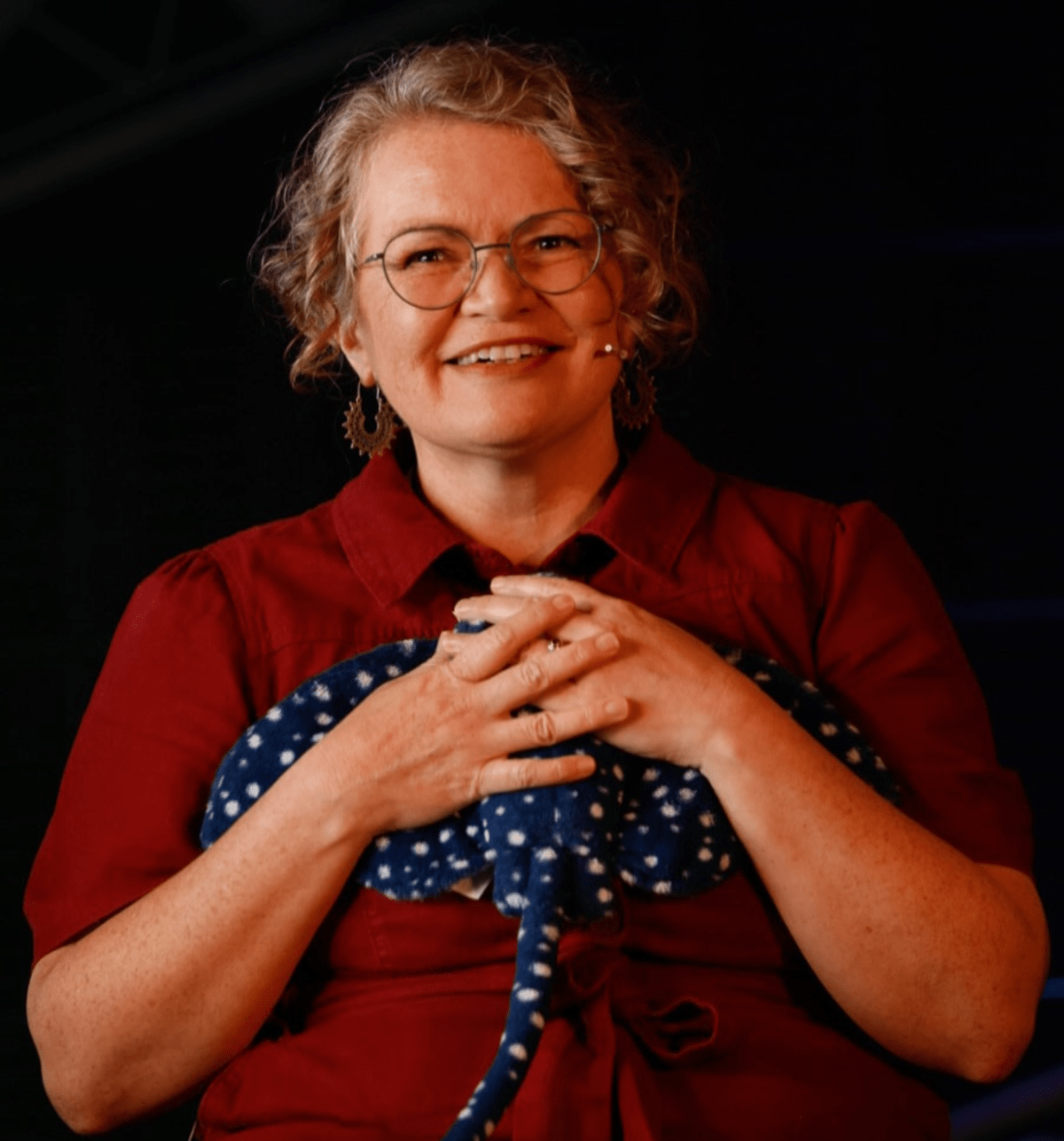
Tina spoke of the sense of awe and profound sense of insignificance she felt when out in the natural world. She pointed out how we need to experience these sensations in order to make space for joy - yet, somehow, we've managed to eradicate them from our modern lives. She clutched her whai (stingray) closely as she shared an emotional tale of returning to her Te Atiawa roots in Waikawa Bay - only to find the shoreline concreted over and many of the traditional kaimoana extinct - all except for the whai. With a tear in her eye, she worried that she was bringing too sombre a mood to the room but the panel immediately reached a heartfelt consensus that joy is so close to pain that it is impossible to discuss one concept without the other - we can't skip over the hard things! The whai are resilient and noticing these things and finding stories is what brings Tina joy. This part of knowing who she is can never be taken away, and these stories can always be passed from generation to generation.
Juanita also spoke of the joy she experiences when connecting to the whenua (land), sharing a kowhai seedling from the ngahere (bush). Being Māori, returning to the whenua holds so much meaning to her, and she reflected on the way she can just 'be' in the nature - she can shed the noise of the world and get in touch with the reality of how things are for her.
Joy across indigenous communities
Reflecting on how a shared sense of relationship with environment can bring joy, Ariana excitedly touched on her upcoming travels to Scandinavia to immerse herself in the joik (vocal tradition) of the Sami people, while Tina contemplated the resonance she often feels when reading fiction by authors from migrant communities. She pointed to an underlying sense of similarity - in language and understanding - that can only be felt because an author has been brought up in a space similar to your own (one that perhaps lacks a sense of comfort or security).
Thoughts turned to indigenous solidarity and Palestine as the panel reflected on how we have to be able to consider who we are in relation others (in terms of 'self', whakapapa, and whenua) in order to learn how to sit with difference and to name and speak up about the hard things. Ariana spoke eloquently of the work of music educator Ahmed Muin Abu Amsha, who turns the sounds of the war (the hum of drones) into music (with traditional instruments and voices) as a message of peace and hope. Through his music school in Gaza, he helps others to endure by creating something beautiful from the source of so much pain.
Creative Joy
With time - but not wisdom, energy or connection - running short, the panel wound things up with a quick whip round to consider how writing and storytelling brought them joy. To Ariana, poetry provides a space where she can express all the elements of her 'self', and just be 'her'.
Poetry also allows Dominic to carve out space to express himself - to speak through a creative platform. He often uses storytelling as a way to speak back to colony and make people feel uncomfortable. Explore some of his poetry.
Writing helps Tina connect with her true self and move away from ego - it's where she feels most 'real'. She's experiencing equal measures of fear and excitement as she begins her next writing project, which will be all about 'joy' - exploring how she, as an indigenous artist, would write if she was hoping to bring herself and others joy.
This brought the work of Hone Tuwhare (his writing on the sensuous themes of food and love) to mind for Ariana.
More about the Indigi-Joy Artists
Ariana Tikao (Kāi Tahu)
A writer, singer, and leading player of taonga puoro (also, formerly a staff member at Christchurch City Libraries!). She draws upon ancestral kōrero for her music and writing and often explores the theme of mana wahine. She is currently working on her first poetry collection "Pepeha | Portal" due to come out in 2026, but in the meantime, you can check out her work in these titles at your local library.
Juanita Hepi (Kāi Tahu, Ngāti Kahungunu, Ngātiwai, Ngāpuhi)
Juanita walks around in a perpetual state of confusion telling yarns to find peace. She has a Masters, a Graduate Diploma and a Bachelor of Arts. When not being a hearty Ōtautahi arts nerd, hautūtū and māmā, she reads, writes, plays capitals of the world, reflects on determinism and rote learns Māori and botanical names for NZ native plants. Check out her conversation with Tia Barrett as they go on a journey of rediscovery through the articulation of moving image, mōteatea, natural ambient soundscape and stone installation in:
Tina Makereti (Te Ātiawa, Ngāti Tūwharetoa, Ngāti Rangatahi-Matakore, Pākehā)
Tina teaches a Master of Arts in Creative Writing workshop at the International Institute of Modern Letters. She is the author of three acclaimed novels: Where the Rēkohu Bone Sings, The Imaginary Lives of James Pōneke, and most recently The Mires, which was shortlisted for the Jann Medlicott Acorn Prize for Fiction at the 2025 Ockham New Zealand Book Awards. This was followed by her collection of essays, This Compulsion In Us, published in 2025. In 2022, her essay ‘Lumpectomy’ won the Landfall Essay Prize, and in 2016, her short story ‘Black Milk’ won the Commonwealth Writers Short Story Prize for the Pacific Region. Her first novel won the 2014 Ngā Kupu Ora Aotearoa Māori Book Award for Fiction, also won by her short story collection, Once Upon a Time in Aotearoa, in 2011. Alongside Witi Ihimaera, she co-edited Black Marks on the White Page, an anthology that celebrates Māori and Pasifika writing.
Find books by Tina Makereti in our collection.
Dominic Guerrera (Ngarrindjeri, Kaurna and Italian)
Dominic Guerrera is a Ngarrindjeri, Kaurna and Italian poet and artist living on Kaurna Yarta. His practice includes, text-based work, poetry and ceramics that focuses on the lived experience of Aboriginal people and their social justice movements. Dominic is the receipt of the Odgeroo Noonuccal Indigenous Poetry Prize and the 2024 David Unaipon Prize. He is currently the First Nations Editor at Cordite Review and his first collection of poetry titled Native Rage will be publish through Queensland University Publishing.
WORD Christchurch
- WORD Christchurch website
- Follow WORD Christchurch on Instagram, Facebook and TikTok
-
Our WORD Christchurch 2025 page
Find books by writers from this year's festival and read our coverage of WORD events

Add a comment to: So much laughter, so much pain: Indigi-joy at WORD Christchurch Festival 2025