

So far 2021 has been the sequel to 2020 that nobody really wanted.
The pandemic has thrown a great many plans into disarray including those of WORD Christchurch whose literary festival has had to be postponed from August this year to November, and the programme of which has been trimmed back with some sessions staying, others shelved (for now), and a few extras popping up.
Fortunately the Faraway Near events that were planned, with international authors beaming in for a chat in a convivial digital venue (a beautifully staged and gussied up TSB Space/Tautoru at Tūranga), are for the most part going ahead with appropriate protocols and distancing will be in place for attendees.
All the Faraway Near sessions look like they'll be excellent but I am particularly interested in one featuring US-residing British writer, Hari Kunzru who will be in conversation with Press journalist, book reviewer and author, Philip Matthews.

My first experience of Kunzru's work was reading White Tears, which is a sort of modern-day ghost story of appropriation, retribution, and the long legacy of racism in the US. Which doesn't really capture it at all. It's a trippy, worrying read, and one that I couldn't stop thinking about.
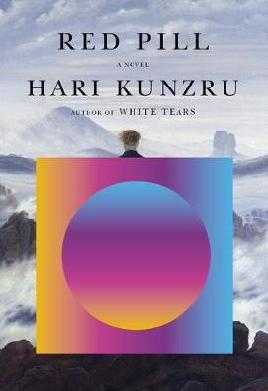 Kunzru's next novel, Red pill, which he'll be discussing during his Faraway Near session, manages a similar vibe of a main protagonist (in this case a writer) whose perspective on the world starts to change and unravel. In Red Pill the narrator becomes haunted by what he finds when he follows a trail on the internet and falls, like Alice, down a rabbithole. Though in this story it's less "Queen of Hearts" and more "predatory Alt-Right brainwashing". This off-putting travail into the dark corners of the soul (and the Internet) is set in the lead-up to the 2016 US election. The one that made Donald Trump the President. It's fair to say there's a strong thread of nihilism that runs through the book and at times it feels like it's only a matter of luck or incidence that it's not actually true.
Kunzru, in his multi-layered, highly referential stories gives the impression of being a very particular and intelligent person, an impression that remains after listening to his podcast, Into the Zone. As a writer of fiction, but someone who does a lot of research, Into the Zone functioned as yes, yet another lockdown project podcast, but also as a sort of very carefully put together dumping ground for some of the real world stories and ideas he wanted to explore. It's clear from the depth of the content that Kunzru is not unfamiliar with falling into a research rabbithole himself.
Episodes cover topics such as Stonehenge, Country vs Rap, Cyberspace, and Life and death (featuring the death-defying natures of tardigrades). Listening made me feel simultaneously like I was becoming smarter while being never more aware of my own shallow, stunted brain. Which is just a very convoluted way of saying "it's smart, folks".
Whether the conversation between Kunzru and Matthews will lean into the philosophical possibilities opened up by the unkillability of water bears or not, it should be a lively one.
Find out more
- The Faraway Near: Hari Kunzru Saturday, 13 November, TSB Space/Tautoru, Tūranga, 12:30 pm - 1:30 pm
- Find titles by Hari Kunzru
- Extraordinary aliens and angry racists: Writer Hari Kunzru Press interview by Philip Matthews
- Our WORD Christchurch 2021 coverage

Add a comment to: Red pill: Hari Kunzru and Internet rabbitholes